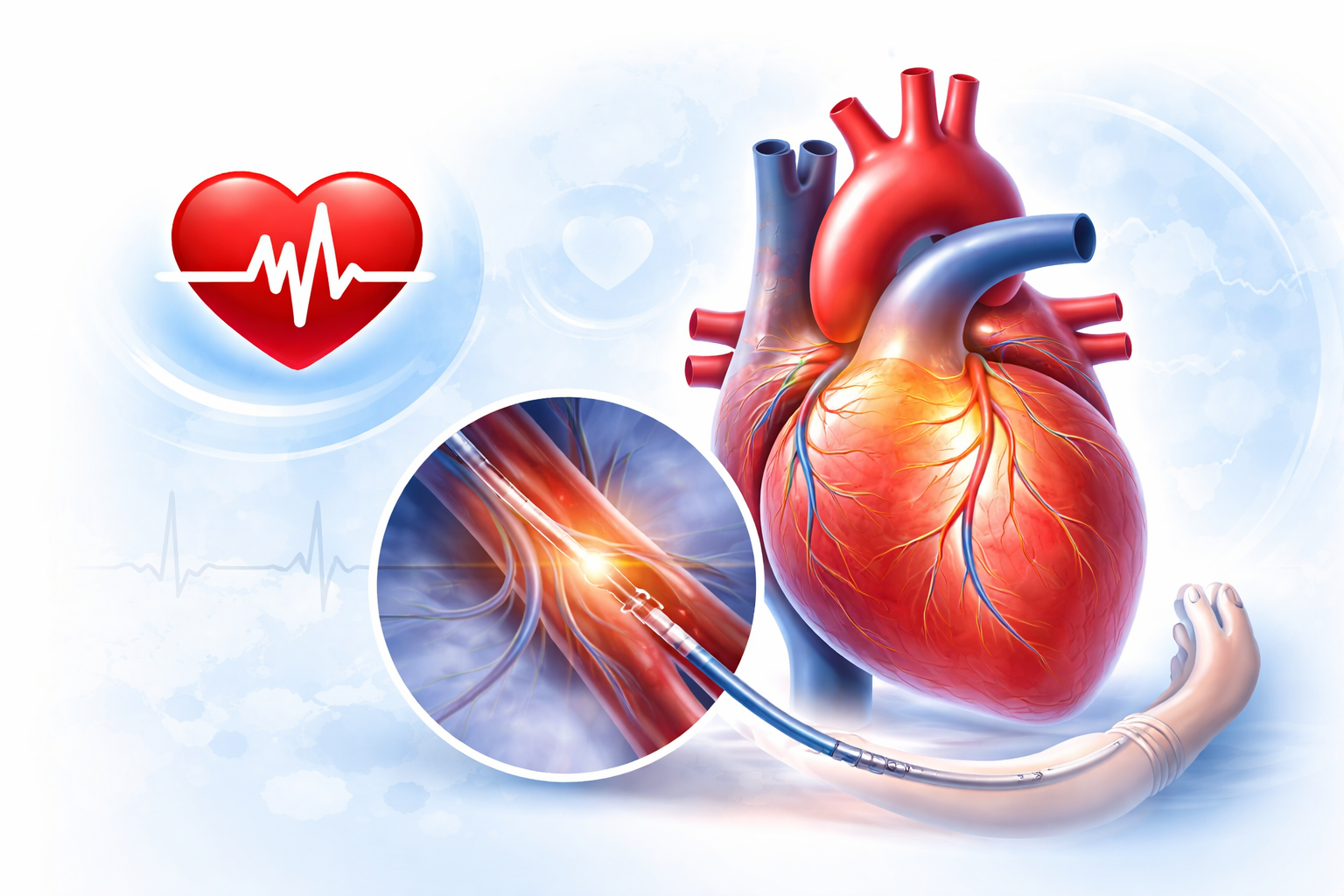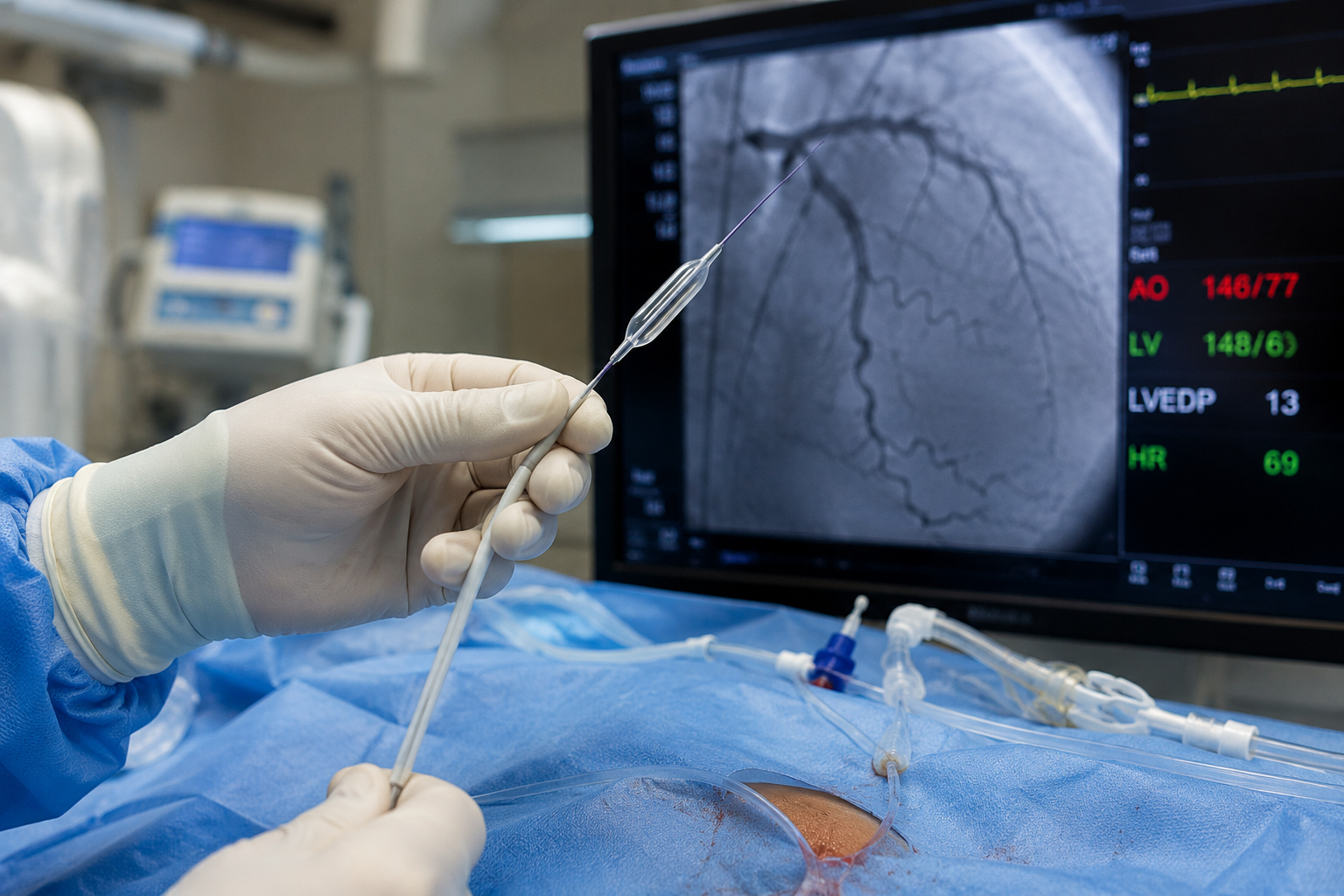
Coronary artery disease (CAD) is one of the leading causes of heart attacks worldwide. Traditionally, blocked heart arteries have been treated with angioplasty followed by the placement of a permanent metal stent. However, advances in interventional cardiology have introduced a new approach known as Stentless PCI (Percutaneous Coronary Intervention), which restores blood flow without leaving a permanent implant inside the artery.
This innovative technique is gaining popularity because it preserves the natural structure of the artery while reducing some long-term risks associated with permanent stents.
What is Stentless PCI?
Stentless PCI is a minimally invasive coronary intervention in which the blocked artery is opened using specialized balloons, such as a Drug-Coated Balloon (DCB) or other advanced plaque-modifying devices, without implanting a permanent metal stent.
During the procedure, the blockage is carefully prepared and widened. A drug-coated balloon then delivers medication directly to the artery wall to reduce the chance of restenosis (re-narrowing), while no metal framework remains inside the vessel.
How Does Stentless PCI Work?
- Coronary angiography identifies the blocked artery.
- The blockage is prepared using specialized balloons or plaque modification techniques.
- A drug-coated balloon delivers anti-proliferative medication directly to the artery.
- The balloon is removed after treatment.
- No permanent metal stent is left inside the artery.
Benefits of Stentless PCI
Stentless PCI offers several advantages compared with conventional stent implantation in carefully selected patients.
- No permanent metal implant inside the artery.
- Preserves the natural movement and flexibility of the blood vessel.
- Lower risk of late stent-related complications.
- Reduced inflammation inside the artery.
- May require a shorter duration of dual antiplatelet therapy in selected patients.
- Facilitates future coronary interventions if needed.
- Excellent option for small coronary arteries.
- Can provide faster vessel healing.
- Reduces the risk of very late stent thrombosis associated with permanent implants.
Who Can Benefit from Stentless PCI?
Stentless PCI is not suitable for every patient. It is recommended only after careful evaluation by an experienced interventional cardiologist.
- Patients with small coronary arteries.
- Patients with in-stent restenosis (previous stent blockage).
- Individuals at high risk of bleeding.
- Patients unable to take prolonged blood-thinning medications.
- Selected patients with simple coronary artery lesions.
- Patients who may require future coronary interventions.
Who May Not Be Suitable?
Conventional drug-eluting stents remain the preferred treatment for many complex coronary blockages. Stentless PCI may not be appropriate for:
- Complex calcified coronary lesions.
- Long coronary artery blockages.
- Left main coronary artery disease in many cases.
- Large vessel dissections after angioplasty.
- Certain emergency heart attack situations.
Is Stentless PCI Safe?
Yes. When performed in carefully selected patients by an experienced interventional cardiologist, Stentless PCI is considered a safe and effective treatment. Multiple clinical studies have shown excellent outcomes with drug-coated balloon technology, especially in small vessel disease and in-stent restenosis.
Recovery After Stentless PCI
Recovery is generally quick because the procedure is minimally invasive.
- Most patients are discharged within 24 hours.
- Normal activities can usually be resumed within a few days.
- Regular medications should be continued as advised.
- Healthy lifestyle changes remain essential.
- Regular follow-up with your cardiologist is recommended.
Lifestyle After the Procedure
Long-term success depends not only on the procedure but also on maintaining a heart-healthy lifestyle.
- Quit smoking completely.
- Follow a balanced, low-fat diet.
- Exercise regularly after medical clearance.
- Control blood pressure, diabetes, and cholesterol.
- Maintain a healthy body weight.
- Take prescribed medications consistently.
When Should You Consult a Cardiologist?
Seek immediate medical attention if you experience:
- Chest pain or chest pressure.
- Shortness of breath.
- Pain spreading to the arm, jaw, or back.
- Excessive sweating.
- Sudden dizziness or fainting.
- Unexplained fatigue during routine activities.
About Dr. Anil Choudhary
Dr. Anil Choudhary is a highly experienced Interventional Cardiologist specializing in advanced coronary interventions, complex angioplasty, intravascular imaging, heart failure management, structural heart interventions, and modern minimally invasive cardiac procedures. He remains committed to providing evidence-based, personalized treatment using the latest technologies to achieve the best possible outcomes for every patient.
Stentless PCI represents an exciting advancement in coronary intervention. While it is not suitable for every patient, it offers significant benefits for carefully selected individuals by treating blocked arteries without leaving behind a permanent metal implant. An expert evaluation by an experienced cardiologist is essential to determine the most appropriate treatment option for each patient.